Top 100 Foundation
Building Pathways For Generational Impact.
The Top 100 Summit celebrates the most accomplished Black women in the world.
The Foundation exists to build the next generation — through education, entrepreneurship, technology, mentorship, and structured access to opportunity.
The charitable arm of the Top 100 Most Powerful Black Women ecosystem — focused on what happens beyond visibility.
CONTACT US / GET INVOLVED100+
LEADERS RECOGNISED
10+
YEARS OF IMPACT
3
ACTIVE PROGRAMMES
∞
GENERATIONAL REACH
What is the Foundation
Impact that Reaches Further
Than the Stage.
The Top 100 Foundation is the charitable arm of the Top 100 Most Powerful Black Women ecosystem.
The Summit celebrates and amplifies accomplished Black women at the height of their influence. The Foundation exists for a different purpose: to build the generation that comes next.
Its work focuses on creating access — to education, entrepreneurship, technology, leadership development, innovation, and economic opportunity. Every programme is designed around a single question: what barrier is preventing a talented person from reaching their potential, and how do we remove it?
To do that, the Foundation works across an unusually broad coalition: schools, colleges, and universities; youth organisations and community groups; governments and charities; businesses and corporate partners; entrepreneurs, future founders, and educators — with a particular focus on women and underrepresented communities.
Recognition must become opportunity. Opportunity must become action. Action must become lasting change.
This is the Foundation's operating philosophy, and it is deliberately sequential.
- Recognition — a name on a list, a moment on a stage — is powerful, but on its own it changes little for the communities watching. Recognition becomes opportunity when it is converted into access: introductions, programmes, funding routes, and open doors.
- Opportunity becomes action when people are equipped to use that access — with skills, mentorship, and confidence.
- And action becomes lasting change only when it compounds: when the person who was supported goes on to employ, mentor, teach, and invest in others. Each stage of the Foundation's work exists to move people along that chain.

Why We Exist
The Problems Are Structural.
So Is Our Response.
The Foundation was created because talent is evenly distributed but opportunity is not. Across the communities we serve, capable people are held back not by a lack of ability or ambition, but by a set of specific, well-documented, and solvable barriers. Naming them precisely is the first step to dismantling them.
The Education Gap
Access to high-quality teaching, enrichment, and progression advice varies dramatically by postcode and income. Two equally capable students can leave school with entirely different futures simply because one had exposure to advanced subjects, informed guidance, and high expectations — and the other did not.
We bring structured learning programmes, real-world challenges, and progression pathways directly into schools and community settings.
Digital Inequality
The economy is digitising faster than access is spreading. Communities without reliable devices, connectivity, digital skills, or exposure to emerging tools are locked out of the fastest-growing sectors.
Digital skills, technology literacy, and applied AI are built into our programmes.
Lack of Business Support
Most people with a viable idea never start, and many who do never scale because practical support is missing.
Venture Lab provides practical business support from first idea through launch and growth.
Lack of Access to Role Models
People calibrate what is possible by what they can see. Without visible role models, ambition quietly narrows.
We connect participants directly with experienced founders and mentors.
Missing Entrepreneurial Ecosystems
Successful founders rarely succeed alone. They emerge from ecosystems where networks, advice, capital, and institutions exist.
We build local innovation infrastructure through cohorts, mentors, and partnerships.
Limited Exposure to Technology
Technology is where economic value is created, yet many young people encounter it only as consumers.
Participants build, prototype, and apply technology to solve real problems.
The Confidence Gap
Capability and confidence are not the same thing. Confidence is built through practice, feedback, and coaching.
Public speaking, leadership practice, and mentoring are embedded throughout our programmes.
Economic Inequality
All of these barriers converge into one outcome: an economic gap that persists across generations.
Everything we do points toward economic mobility, entrepreneurship, and employment.
These challenges are connected, so our response is connected too — one foundation, working across education, mentorship, enterprise, and opportunity at the same time, because no single intervention is enough on its own.
From Visibility to Legacy
One Ecosystem.
Two Engines. One Outcome.
The Summit and the Foundation are not separate ventures. They are two halves of a single system, each powering the other — celebration feeding development, and development giving the celebration lasting meaning.
Top 100 Summit
Identifies, celebrates, and amplifies the most accomplished Black women across business, technology, public life, and culture.
The Summit creates visibility at scale—and with it, a network of proven leaders, decision-makers, and institutions.
Top 100 Foundation
Converts that visibility into structured development. The leaders the Summit celebrates become the mentors, advisers, and door-openers of the Foundation's programmes.
Recognition becomes curriculum, networks, funding pathways, and opportunity for the next generation.
Long-Term Community Impact
Programme participants become graduates; graduates become founders, professionals, and leaders; and those leaders return to the ecosystem as the next generation of mentors and, in time, honourees. The loop closes—and compounds.
The relationship is deliberate. Awards ceremonies, on their own, celebrate the past. Development programmes, on their own, struggle to offer participants proof that the path works.
Combined, each solves the other's weakness: the Summit gives the Foundation living evidence — one hundred careers that demonstrate what is possible — and the Foundation gives the Summit a legacy beyond the evening itself.
In practice, the Summit celebrates leaders; the Foundation develops future leaders. Honourees contribute time, expertise, and networks. Corporate partners who sponsor the celebration extend their commitment into programmes.
And every cohort that comes through the Foundation strengthens the pipeline of talent the Summit will one day recognise. Visibility becomes legacy — by design, not by hope.
Flagship Programme
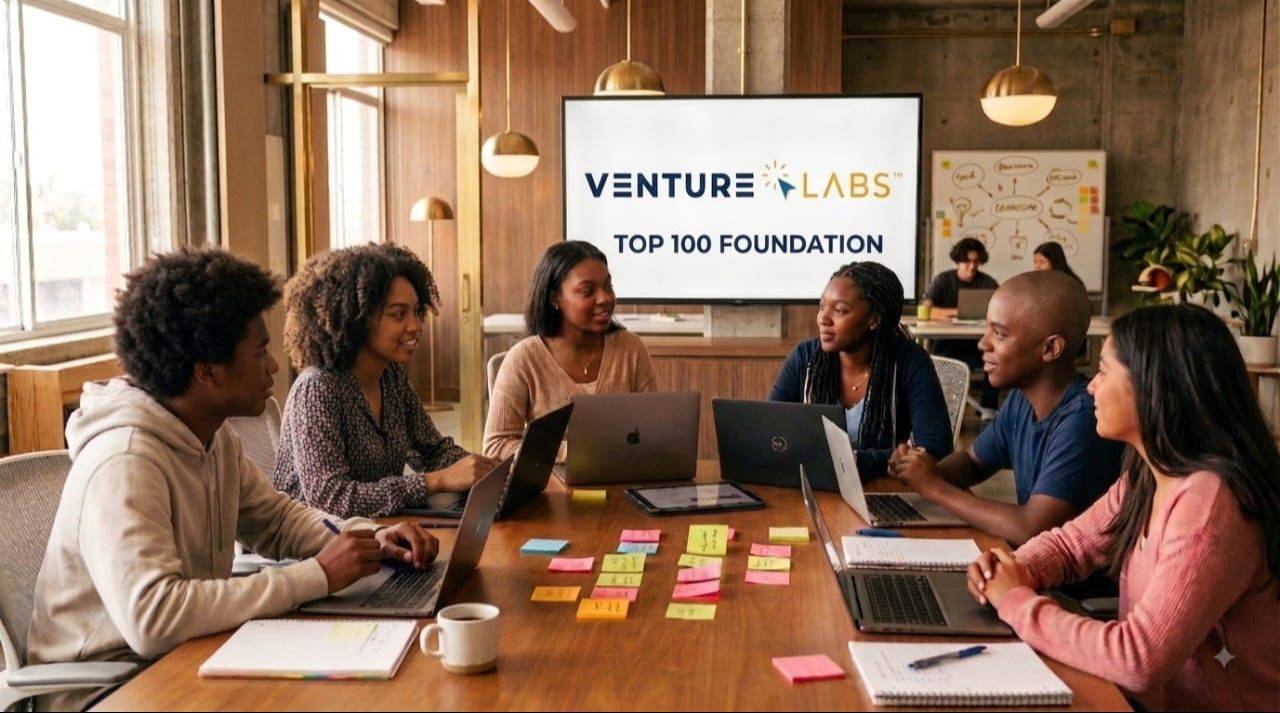
Venture Lab
10
Stages, Idea to ImpactOne
Innovation EcosystemVenture Lab is the Foundation's flagship programme — and it is important to be precise about what it is. It is not a single course, a workshop series, or a competition. It is an innovation ecosystem: a connected set of learning, mentoring, support, and funding-readiness stages that carries a person from an unformed idea to a working venture with real community impact.
Most entrepreneurship support fails at the handover points — a course ends, a mentor moves on, a grant application is rejected, and momentum dies. Venture Lab is built to remove those gaps. Every stage hands directly into the next, and participants remain inside one continuous system of people, resources, and accountability from beginning to end.
Because ideas arrive at different stages of maturity, so do participants. A student with a first spark enters at Discovery. An operating small business seeking investment may enter at Funding Readiness. The ecosystem meets people where they are, and moves them forward from there.
The Journey: From Idea to Implementation.
Ten stages, each with defined support, defined outputs, and a defined handover into the next. Participants are guided through every stage by programme leads, mentors from the Top 100 network, and partner institutions.
Discovery
Participants identify problems worth solving and the strengths they bring to them. Structured exercises turn vague ambition into a defined opportunity.
Example: a college student frustrated by food waste maps who is affected, what already exists, and where the real gap is before writing a business plan.
Skills
Practical capability-building across entrepreneurship, financial literacy, AI tools, communication, and problem solving.
Example: participants use AI tools to research a market before presenting findings.
Mentoring
Every participant is matched with mentors from the Top 100 ecosystem and supported through regular sessions.
Example: a first-time founder avoids years of avoidable mistakes through mentor guidance.
Validation
Ideas meet reality through interviews, prototypes, pilots, and customer feedback.
Example: testing with schools proves the buyer is different than expected.
Business Support
Business models, pricing, legal basics, operations, invoicing, and launch planning.
Example: pricing correctly transforms a hobby into a business.
Funding Readiness
Participants prepare grant applications, budgets, projections, and investor documents.
Example: the first funding application is completed with mentor support.
Investment Readiness
Learn how investors think, how to pitch, and what makes opportunities investable.
Example: founders refine both their story and numbers before meeting investors.
Launch
The venture goes live with its first customers, first revenue, and continued support.
Example: a launch amplified by the network reaches early customers immediately.
Support is continuous across all ten stages. Participants are never handed a workbook and left alone: programme leads track progress, mentors stay engaged across transitions, and partner institutions — schools, universities, non-profits, and businesses — provide facilities, expertise, and routes to opportunity throughout.
Venture Lab serves individuals and institutions alike. A career changer testing a second act, a small business preparing for investment, a non-profit developing an earned-income model, a university embedding enterprise into its offer — all enter the same ecosystem, at the stage that fits.
Venture Labs for Schools
Real-World Challenges,
Inside the School Day.
Schools partner with the Foundation to bring the Venture Lab model directly into their classrooms.
Rather than a one-off enrichment visit, a school partnership is a structured programme: the Foundation provides the framework, materials, mentors, and training; the school provides the students, the timetable, and the local context. Together they run challenge-based learning that sits alongside — and reinforces — the academic curriculum.
The core method is simple and powerful: students work on real-world challenges. They identify genuine problems in their school or community, form teams, research the problem, design a solution, build or prototype it, and present it — to teachers, parents, local businesses, and mentors from the Top 100 network. The problem is real, the audience is real, and so is the learning.
Along the way, students practise the full range of capabilities the programme is designed to build: entrepreneurship and innovation as disciplined processes rather than buzzwords; hands-on work with technology and AI as tools for building, not just consuming; leadership within a team; public speaking to real audiences; structured problem solving; and the digital skills, career readiness, and future-of-work awareness that formal curricula rarely have room for.
Community projects anchor everything. When students improve something in their own neighbourhood — a service, a space, an information gap — they learn the most important lesson the programme can teach: that they are capable of changing the conditions around them.
For students
Measurable growth in confidence, communication, and problem-solving; a completed real-world project for applications and CVs; direct contact with role models and mentors; and a concrete sense of the pathways open to them after school.
For teachers
A ready-made, supported framework for enterprise and careers education — with training, materials, and external mentors provided — rather than another initiative to build from scratch.
For schools
A demonstrable enrichment and careers offer, strengthened community and employer links, and evidence of impact that supports inspection and development priorities.
For communities
Student projects that address real local needs — and a generation of young people who see their community as something they can build, not just live in.
Strategic Partnership
SCLA.io
Great programmes need great educational infrastructure. The Foundation's strategic partnership with SCLA.io provides it.
SCLA.io is the Foundation's strategic education partner. Where the Foundation brings mission, network, and community reach, SCLA brings the educational machinery underneath: the infrastructure, curriculum support, and learning pathways that turn ambition into a programme that can actually be delivered — consistently, at scale, and to a measurable standard.
In practical terms, SCLA's contribution runs through three layers.
- Educational infrastructure: the platforms and systems through which learning is delivered, progress is tracked, and outcomes are evidenced.
- Curriculum support: structured content and pedagogy that give every Venture Lab stage — from Discovery through to Investment Readiness — a coherent educational spine, so that what participants learn is deliberate rather than improvised.
- Learning pathways: sequenced routes through the material that meet each learner where they are, whether that is a school student encountering entrepreneurship for the first time or an adult founder preparing for investment.
This is why the partnership matters. Many well-intentioned programmes deliver inspiration without structure — a memorable day that changes nothing a month later.
The SCLA partnership ensures the opposite: every Venture Lab experience sits on a designed curriculum, every participant follows a coherent pathway, and every outcome can be evidenced. It also means the Foundation can grow responsibly — a new school partnership or regional cohort launches on proven infrastructure rather than being rebuilt from nothing each time.
Educational Infrastructure
The delivery systems beneath every programme — how learning is provided, tracked, and quality-assured across schools, cohorts, and regions.
Curriculum Support
Structured content and pedagogy for each stage of the Venture Lab journey, so learning is sequenced, rigorous, and consistent wherever it is delivered.
Learning Pathways
Designed routes through the material for different starting points — school students, future founders, career changers, and operating businesses.
What It Makes Possible
Consistent quality, measurable outcomes, and the ability to scale Venture Labs to new schools and communities without diluting the experience.
Educational Leadership
Dr. Cheryl Pruitt
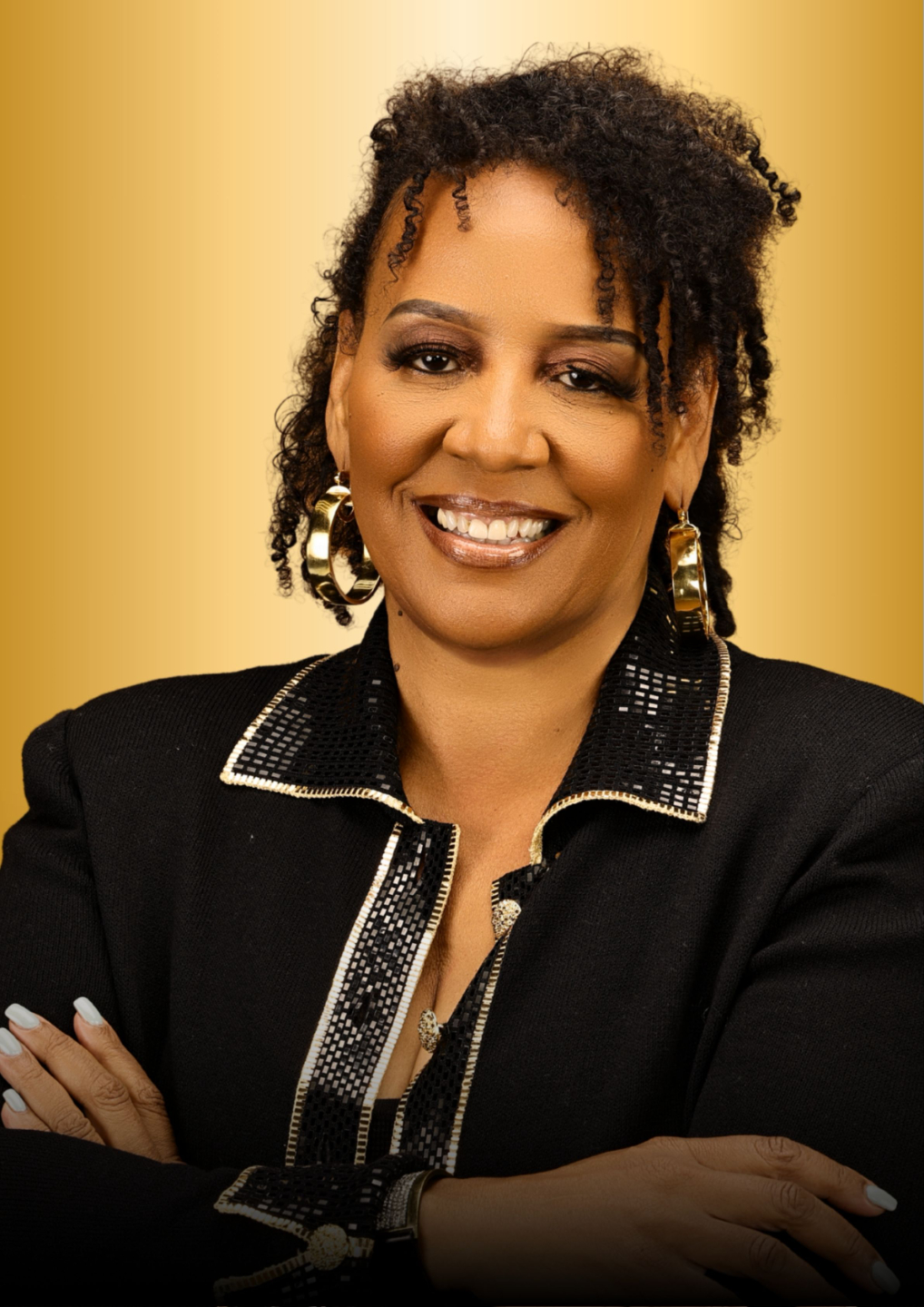
The SCLA partnership is guided on the education side by Dr. Cheryl Pruitt, whose role is to ensure that the Foundation's programmes are not only inspiring but educationally sound. She leads the educational design of the partnership: how curriculum is structured, how learning pathways are sequenced, and how outcomes are defined and measured across Venture Lab and its school programmes.
Her contribution addresses a specific and persistent gap. Education and entrepreneurship are usually run as separate worlds — schools teach knowledge, enterprise programmes teach hustle, and learners are left to bridge the two alone. Dr. Pruitt's work within the partnership connects them: entrepreneurial experiences are built on genuine pedagogy, and academic learning is connected to real-world application. The result is a programme where a student's business challenge is also a structured learning experience, with clear objectives and assessable progress.
Learners benefit in concrete ways. Programmes are sequenced to how people actually learn, not just to how businesses are built. Content is age-appropriate and stage-appropriate, from first exposure in schools through to adult founders. Progress is measured, so participants, teachers, and partners can see growth rather than take it on faith. And the standards applied across the partnership mean a Venture Lab experience carries the same educational integrity wherever it is delivered.
Four Pillars
The Structure Behind
The Mission.
The Foundation's work is grounded in four interconnected pillars — each addressing a distinct dimension of how leadership is formed, supported, and sustained.
Together they form a complete system: education builds capability, mentorship builds confidence and direction, opportunity converts both into progress, and leadership development ensures that progress is sustained and shared.
Education
Structured access to learning that goes beyond the standard curriculum: entrepreneurship, digital and AI skills, financial literacy, leadership thinking, and a real-world understanding of how opportunity is created and pursued. Education, in the Foundation's model, is not information transfer — it is the deliberate building of capability and clarity.
Why it matters
Every other barrier the Foundation addresses runs through education. The knowledge gap is where the opportunity gap begins — and closing it early changes the trajectory of everything that follows: subject choices, career entry, enterprise, and earnings.
Who it serves
School and college students through Venture Labs for Schools; university students and adult learners through structured pathways; and community learners who never had access to this material the first time around.
How success is measured
Skills gained and evidenced against defined learning outcomes, programme completion, qualifications and progression rates, and — over time — the destinations of learners after they leave.
In practice
A cohort of students completes a term-long enterprise curriculum — and leaves not with a certificate alone, but with a validated project, presentation experience, and a documented set of new capabilities.
Mentorship & Development
Sustained guidance from experienced leaders, founders, and practitioners — drawn substantially from the Top 100 network — who support growth through lived experience and applied insight. Mentorship here is structured and long-term: matched relationships, regular sessions, and honest accountability, not a single inspirational encounter.
Why it matters
Knowledge tells you what to do; mentors show you how it is actually done — and that you belong among the people doing it. Mentorship is the Foundation's most direct answer to the role-model gap and the confidence gap, and research consistently links it to persistence, aspiration, and achievement.
Who it serves
Venture Lab participants at every stage, students in school programmes, and emerging professionals — with mentors matched by sector, stage, and goals rather than assigned at random.
How success is measured
Relationship duration and engagement, participant-reported confidence and clarity, mentor-assessed progress against agreed goals, and the proportion of mentees who later return as mentors themselves.
In practice
A first-generation founder meets monthly with a mentor who has built in the same industry — and gains, in one relationship, the informal knowledge that others inherit from family and networks.
Opportunity
Structured access to learning that goes beyond the standard curriculum: entrepreneurship, digital and AI skills, financial literacy, leadership thinking, and a real-world understanding of how opportunity is created and pursued. Education, in the Foundation's model, is not information transfer — it is the deliberate building of capability and clarity.
Why it matters
Preparation without access is potential wasted. Much of what is called a "skills gap" is really an access gap: opportunity travels through networks, and networks are unevenly distributed. This pillar redistributes them.
Who it serves
Programme graduates ready for their next step; founders seeking customers, partners, and capital; students seeking placements and first roles; and community organisations seeking institutional relationships.
How success is measured
Opportunities created and taken up — placements, introductions that led to outcomes, funding accessed, ventures launched — and the growth of participants' own networks over time.
In practice
A Venture Lab graduate is introduced to a corporate partner through the ecosystem — and a conversation that would never otherwise have happened becomes her first major contract.
Leadership Development
The deliberate building of the capabilities leadership actually requires: sound decision-making, responsibility, communication, resilience, and the ability to operate with direction and purpose across business, education, and community environments. Leadership is treated as a learnable practice — developed through real responsibility, real audiences, and real feedback.
Why it matters
Individual success that stops with the individual changes little. Communities change when their people lead — enterprises, institutions, and civic life. Leadership development is what converts personal progress into the generational impact the Foundation exists to create.
Who it serves
Young people taking their first leadership roles in school programmes; founders learning to lead teams; and emerging community leaders stepping into civic and organisational responsibility.
How success is measured
Leadership roles taken during and after programmes, teams and projects led, community initiatives started, and 360-style growth in confidence and capability reported by participants and those around them.
In practice
A student who joined a school Venture Lab too nervous to present now leads a team, pitches to a panel of professionals — and returns the following year to help run the programme.
How We Create Impact
An Ecosystem, Not a Pipeline.
This is the Foundation's theory of change, stage by stage. It begins in community and ends in community — because impact that stops with the individual is incomplete.
Each link creates the conditions for the next, and the final links feed back into the first: the leaders this system produces become the mentors, employers, and investors who strengthen it for those who follow.
Community
Everything starts where people are. We work through schools, community groups, and local institutions that people already know and trust.
Education
Structured learning opens the map — showing what is possible and how opportunity is actually created.
Skills
Knowledge becomes capability: entrepreneurship, digital and AI fluency, financial literacy, communication.
Mentorship
Experienced leaders provide direction, honesty, and proof that the path is real.
Networks
Participants gain the relationships through which opportunity actually travels — peers, professionals, institutions.
Confidence
Practice, feedback, and belonging build the self-belief to act on capability — the quiet variable behind every visible outcome.
Entrepreneurship
Some build ventures — creating products, services, and jobs through Venture Lab's staged support.
Employment
Others advance into careers — readier, better connected, and aiming higher than they would have alone.
Economic Mobility
Income, ownership, and assets grow — the measurable turn where opportunity becomes changed circumstances.
Community Leadership
Those who progressed take responsibility — mentoring, employing, leading institutions, shaping local decisions.
Generational Impact
Children grow up around role models, businesses, and expectations that did not exist a generation before. The cycle restarts — stronger.
Our Philosophy
Visibility Is Not Enough.
The Top 100 Summit Creates Visibility at Scale.
But visibility alone is not enough.
Without structure, visibility becomes noise. Recognition must become opportunity. Opportunity must become action. Action must become lasting change.
The Foundation exists to ensure visibility becomes access, development, opportunity, and long-term progression.
We are not only amplifying leaders. We are strengthening the environments that shape them — the schools, networks, institutions, and expectations that determine who gets to lead.
That includes individuals, communities, and the systems that influence how leadership is formed and sustained. Every programme on this page is a link in that chain: from a name on a stage to a changed set of possibilities in a community.
Who We Partner With
Impact is a Team Endeavour.
No foundation changes structural problems alone. Everything described on this page is delivered through partnerships — each partner contributing something specific that the system needs.
Corporate Organisations
Provide funding, expertise, work placements, and routes into employment and procurement. Corporate partners turn CSR commitments into structured programmes with evidenced outcomes — and gain direct access to a pipeline of emerging talent and ventures.
Governments
Local and national government partners align programmes with education, skills, and economic-development priorities — providing reach, legitimacy, and in some cases funding, while the Foundation delivers community-level implementation they could not achieve alone.
Schools
Host Venture Labs for Schools, embedding real-world challenges in the school day. Schools contribute students, staff, and timetable; the Foundation contributes framework, training, mentors, and materials.
Universities
Extend the pathway beyond school — hosting programmes, contributing research and teaching expertise, opening facilities, and connecting students to the Foundation's enterprise and mentorship ecosystem.
Community organisations
The Foundation's roots into the communities it serves. Local organisations bring trust, knowledge, and reach that no external body can replicate — and gain programmes, resources, and networks for the people they serve.
Foundations
Peer foundations and grant-makers co-fund programmes, share evidence and practice, and extend impact into new regions — collaboration, not duplication.
Sponsors
Fund specific programmes, cohorts, and events. Sponsorship is structured and transparent: sponsors know exactly what their support delivers, for whom, and with what measurable result.
Investors
Engage with Venture Lab's investment-ready founders — gaining early access to overlooked talent and markets, while giving participants what they need most at that stage: real capital conversations.
Volunteers
Contribute time and skills across programmes — facilitating workshops, judging challenges, supporting events, and providing the professional expertise that keeps delivery strong.
Mentors
The human core of the ecosystem. Drawn from the Top 100 network and beyond, mentors give sustained, matched guidance to participants — the single most cited factor in participant progress.
Our Long-Term Vision
The Next Decade.
Building Leadership Ecosystems
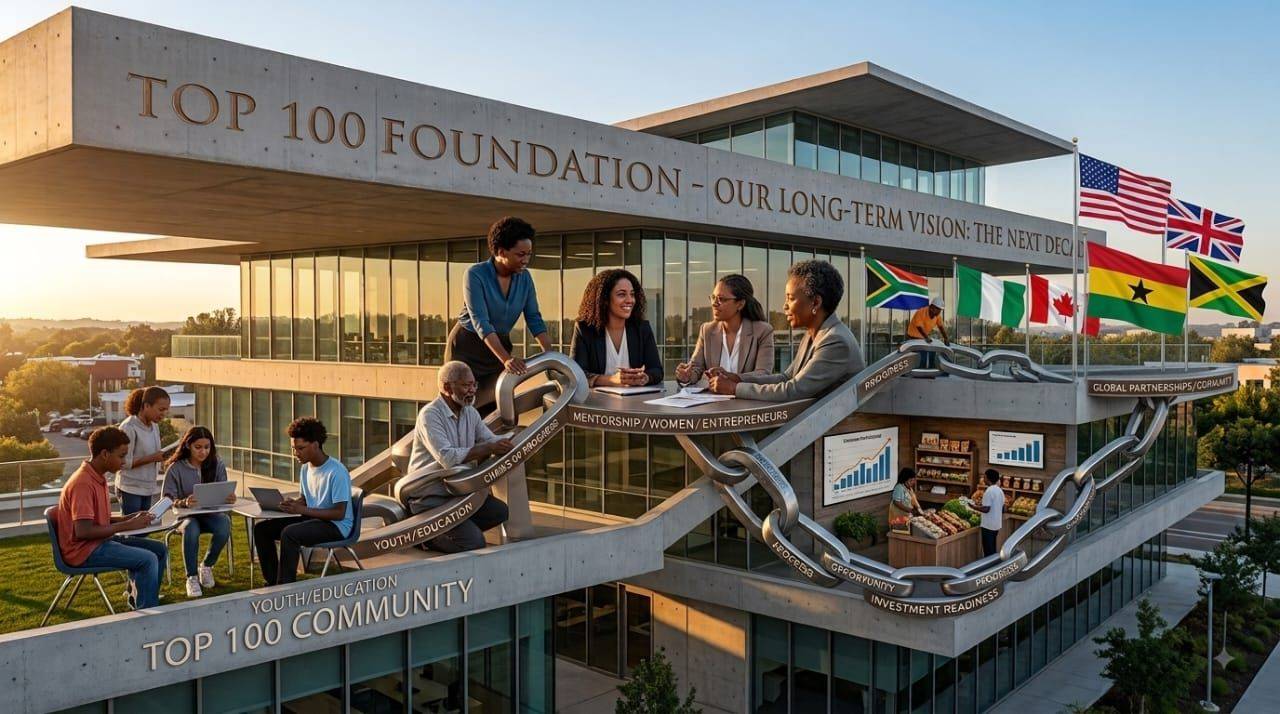
Not isolated programmes, but connected environments — education, mentorship, enterprise, and opportunity working as one system — established in every community we serve, and durable enough to outlast any single funding cycle.
Growing Local Innovation Hubs
Physical and institutional homes for Venture Lab in the regions where we work: places where founders, students, mentors, and partners meet — so that ecosystems have an address, not just a schedule.
Creating Future Entrepreneurs
A steady, growing flow of founders through the full Venture Lab journey — from first Discovery cohorts in schools to launched, growing ventures — each one proof, in their own community, that the path works.
Increasing Economic Mobility
Measured, not asserted: rising incomes, business ownership, and asset-building among programme graduates, tracked over years — because the point of everything above is changed economic circumstances.
Supporting Women
Continuing the ecosystem's founding commitment: pathways designed for women and girls at every stage — from classroom programmes to investment readiness — until representation in leadership and ownership stops being remarkable.
Supporting Youth
Reaching young people early enough to shape trajectories, not just remediate them — expanding Venture Labs for Schools so that enterprise, technology, and leadership education becomes a normal part of growing up.
Supporting Communities
Keeping community at both ends of the model: programmes rooted in local needs, and graduates who return value locally — jobs, mentorship, services, and leadership.
Developing Global Partnerships
Extending the model internationally through partners who share it — connecting communities, founders, and institutions across borders, so that an idea proven in one place can create opportunity in another.
Ways to Get Involved
Choose Your Pathway In.
There is no single way to contribute — the ecosystem needs funders, teachers, mentors, institutions, and hands. Every pathway below is a real, structured route into the work. Tell us which one fits, and we will take it from there.
Become a Partner
For organisations ready to build something long-term with us — co-designed programmes, shared goals, and evidenced outcomes.
Start the conversation →Become a Mentor
Give sustained guidance to a student, founder, or emerging leader. Matched by sector and stage; supported by the Foundation throughout.
Offer your experience →Sponsor a Programme
Fund a specific cohort, school programme, or Venture Lab stage — with full visibility of what your support delivers and for whom.
Sponsor with purpose →Support Venture Labs
Back the flagship directly — funding, expertise, facilities, or opportunities for participants moving from idea to launch.
Strengthen the flagship →Partner as a School
Bring Venture Labs into your school — framework, training, mentors, and materials provided; real-world learning for your students.
Bring it to your students →Corporate CSR
Turn corporate social responsibility into structured, measurable impact — employee volunteering, placements, funding, and expertise.
Make CSR count →Volunteer
Give time and skills — facilitating workshops, judging student challenges, supporting events, or lending professional expertise.
Give your time →Donate
Direct financial support for programmes, participants, and growth. Every contribution funds specific, evidenced work.
Fund the mission →Community Partnership
For community groups and local organisations: bring programmes to the people they serve, with the Foundation's full support behind you.
Partner locally →Get Involved
Build Something That Lasts.
The Foundation welcomes collaboration from education institutions, community organisations, corporate partners, governments, investors, leadership programmes, and ecosystem builders.
This is a shared space for long-term impact and structured development — from a first conversation to a multi-year partnership.